Nothing is hidden on the TEC-1G. All the chips that make it work are simple to understand which makes ground-level learning of how computers work at a fundamental "bare metal" level an achievable reality.
Although the BASIC language is available, the focus of the TEC-1G is on the raw, ground-level MACHINE CODE that all computers use at a fundamental level.
A computer wouldn't be much use if it could not accept your input, nor display any output. Learn how computers talk to peripherals using all manner of connections and interfaces.
A Z80 CPU running at 4Mhz.
Four 16K ROMs are switch selectable to boot up the Monitor you wish.
32K of RAM with an Expansion socket for a further 16K of RAM, FRAM or ROM.
It still has the original Seven Segment displays, but now also has a 20x4 Character LCD.
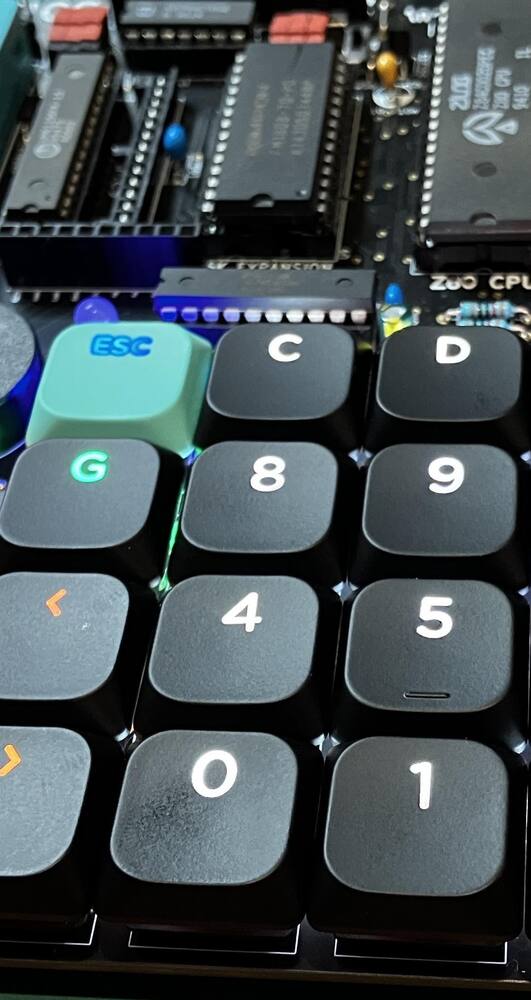
No spongy keys or terrible membranes; Backlit low profile mechanical keys.
Now it is easy to download programs via a USB cable to your PC.
My first computer that I bought, put together and programmed back in 1983 was a TEC-1. I added the 8x8 and hating the spongy keys, made an external keypad made with mechanical keys. One of my first programs was a simple maze that I hand coded in hexadecimal. I would still have that original TEC-1, but I donated it to the Australian Computer Museum on the 40 year anniversary, the same year I released the TEC-1G.
Aluminium
Carbon
Fibreglass